Thrift, But At What Cost?
This past weekend, we took a trip to New York and did what everyone does now, went thrifting. And I’ll say this plainly, thrifting in New York requires a different level of awareness. The market has shifted. What used to feel like a hunt now feels… priced. Many thrift stores are operating closer to consignment, and if you’re reaching for a recognizable brand, like Carhartt, which I know well, you’ll notice the markup immediately. Especially on items like overalls. Men’s, women’s, children’s, baby, it doesn’t matter, there’s a premium attached.
And that shift speaks to something bigger. Thrifting is no longer just about discovery, it’s become a lifestyle, almost a middle-class hobby. People aren’t necessarily digging anymore, they’re browsing. The thrill of “the find” has been replaced with curated racks and calculated pricing. It’s commercial now, that’s just the reality we’re in.
But that’s not really what stayed with me.
What I noticed, from Florida all the way to New York, was the sizing. Rack after rack, more smalls. Extra smalls. Mediums. Larges if you’re lucky. And it made me pause. Because we live in a world that constantly talks about body inclusivity, yet the thrift floor tells a different story. Curvy women, women in extended sizes, they are present, they are shopping, but they’re often working harder. Altering pieces. Reimagining garments. Taking oversized, outdated silhouettes and making them modern. And that requires skill, sewing, tailoring, vision. Not everyone has that.
Meanwhile, the smaller sizes tend to be more current, more wearable, more “plug and play.” You’ll find the contemporary brands, the athleisure, the pieces that move quickly in and out of closets. But extended sizes, when you do find them, they often lean dated, less bridge, less contemporary, more “inherited” than intentional. And that raises a question, where are the good pieces going?
Is it a matter of turnover, are curvier women holding onto their clothes longer? Are those garments being worn to the point where donation isn’t an option? Or is it that brands still aren’t producing extended sizes with the same quality and longevity as their straight-size counterparts? There’s a psychology here, a supply issue, maybe even a value gap.
Because the truth is, there are women, many of them, who rely on thrift as a way to access style affordably. And while niche shops for curvy shoppers do exist, they are few and far between. You have to search for them, travel for them, know about them. And in a retail landscape that claims inclusivity, that gap feels worth examining.
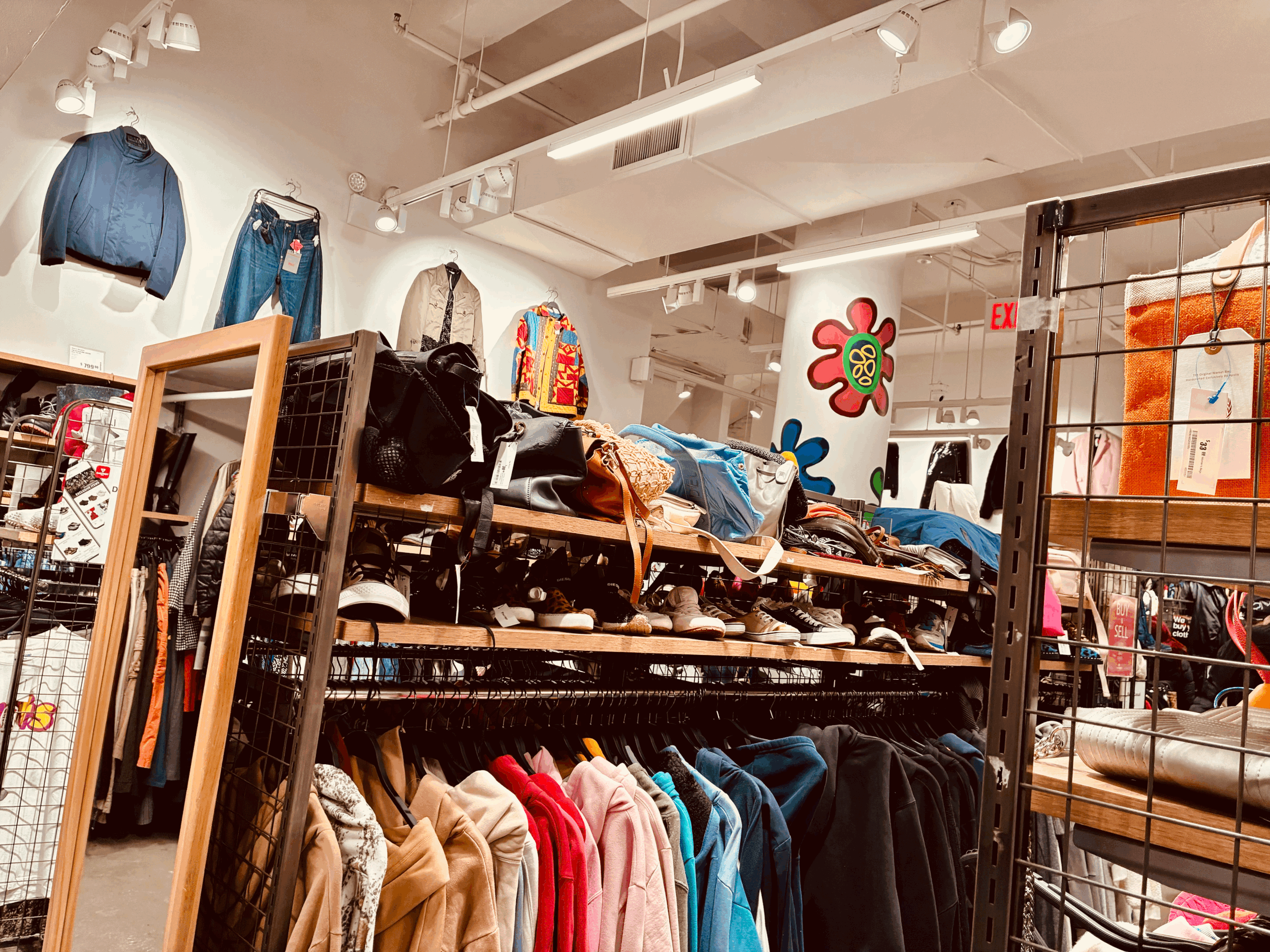
Inside the thrift store
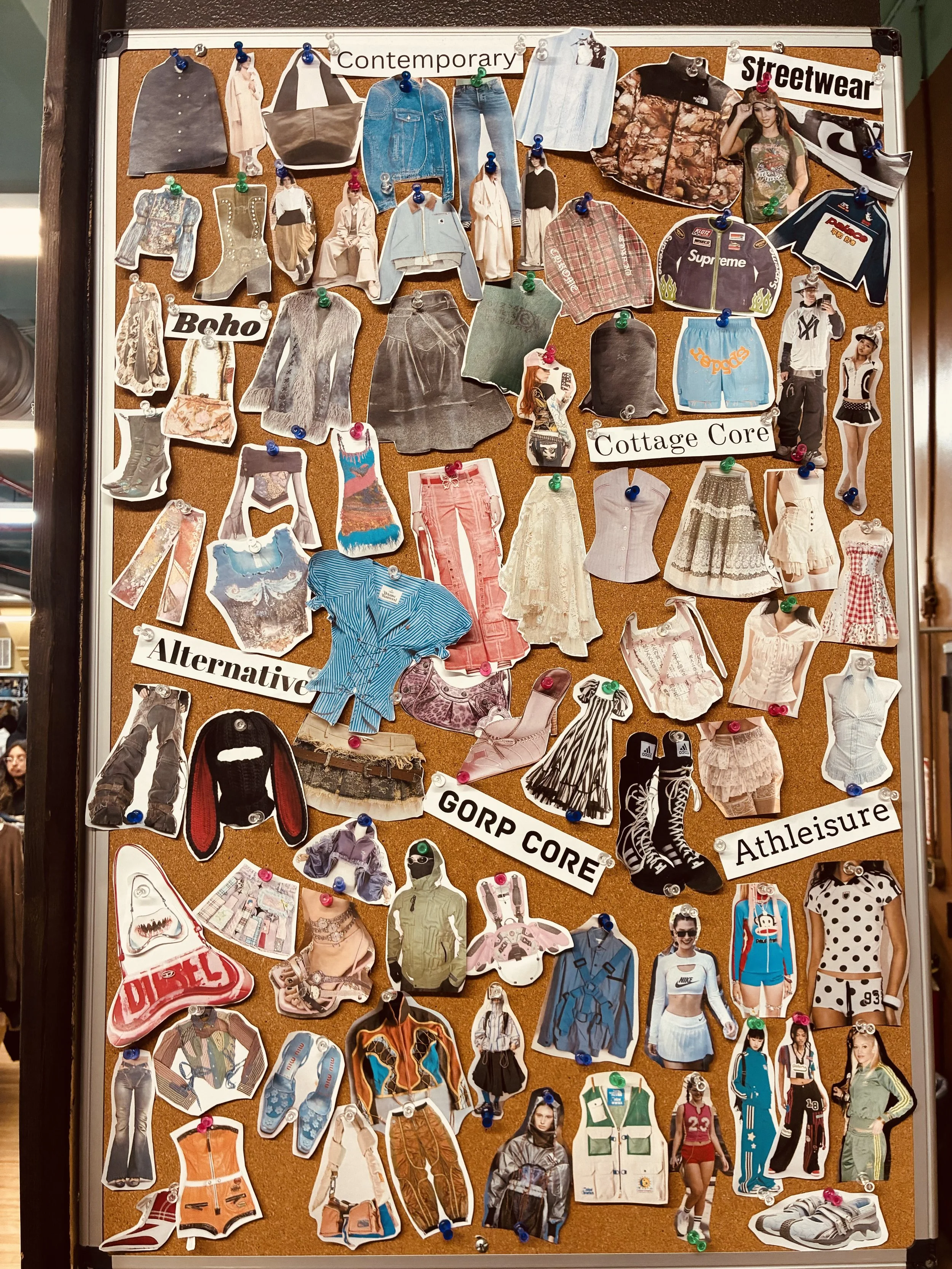
Re-seller inspiration board
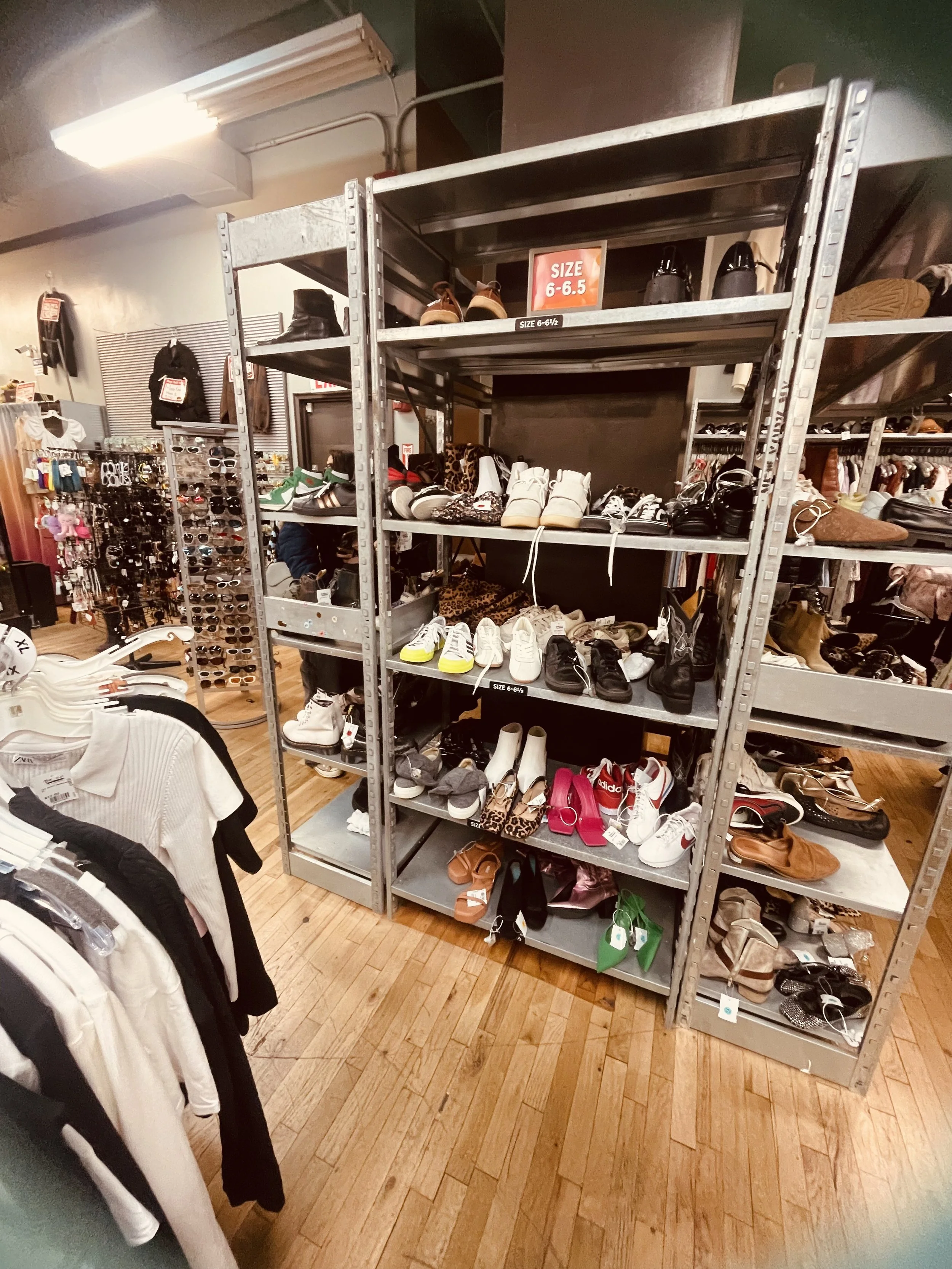
This image is of the inside a thrift store
